
RPG Card Games:
The Complete Guide (2026)
What Is an RPG Card Game?
Fantasy adventure has never been more accessible. RPG card games combine the excitement of role-playing games with the fast setup and portability of traditional card games, allowing players to jump into epic adventures without spending hours creating characters or preparing a lengthy campaign. Whether you’re gathering friends around the kitchen table, looking for a quick game night experience, or searching for an introduction to fantasy gaming, RPG card games offer a unique blend of strategy, character progression, combat, and storytelling.
Unlike collectible card games that require building expensive decks or traditional tabletop RPGs that often rely on a Game Master, many RPG card games are designed to be easy to learn while still delivering meaningful choices and memorable adventures. Players can battle monsters, collect powerful equipment, cast spells, complete quests, and develop unique characters—all within a game that can often be played in under an hour.
The genre has expanded rapidly over the past decade, offering everything from cooperative dungeon crawls and solo adventures to competitive fantasy battles. Some games focus on tactical combat, while others emphasize exploration, deck building, or narrative decision-making. This variety makes RPG card games an excellent choice for experienced role-players and newcomers alike.
This guide explores every aspect of the genre. You’ll discover what defines an RPG card game, how they compare to traditional tabletop RPGs and deck-building games, the different styles available, and what features to look for when choosing your next adventure. Whether you’re researching the hobby or searching for your next favorite fantasy game, this page will help you navigate the world of RPG card games with confidence.
Well-Known Examples of RPG Card Games
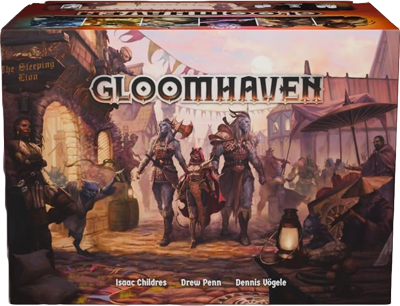
While RPG card games vary widely in style and complexity, several well-known titles help illustrate how the genre works in practice. Each approaches role-playing through cards in a different way, highlighting the flexibility of the format.
Gloomhaven
Often cited as a landmark in modern tabletop design, Gloomhaven demonstrates how card-driven mechanics can support deep character progression and long-term campaigns. While it incorporates boards and miniatures, its core gameplay—combat, abilities, and decision-making—is driven by cards.
Why it matters:
It shows how cards can replace traditional RPG systems while still supporting complex, persistent adventures.
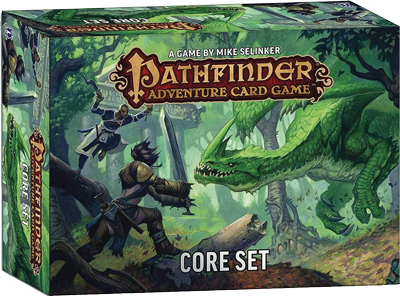
Pathfinder Adventure Card Game
Designed as a card-based adaptation of a tabletop RPG, the Pathfinder Adventure Card Game uses decks to represent characters, locations, monsters, and narrative events. Progression happens through deck-building and scenario-based campaigns.
Why it matters:
It illustrates how established RPG systems can be translated into a fully card-driven role-playing experience.
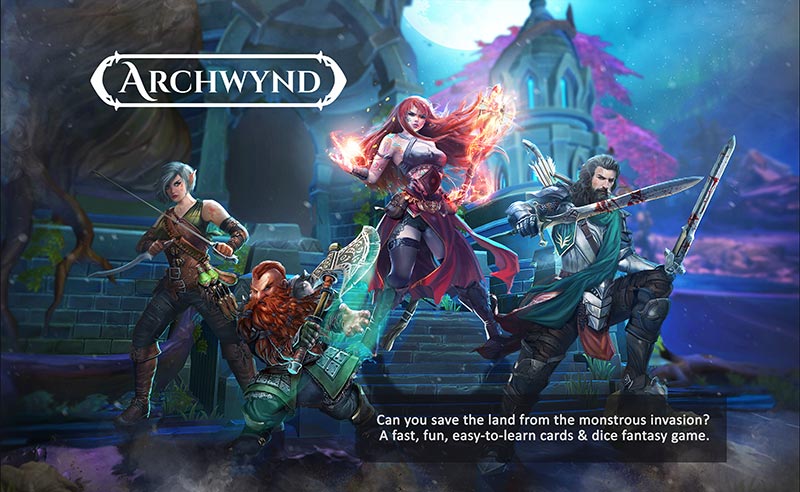
Archwynd by RPG Battles
Archwynd combines tactical card battles with an evolving fantasy progression where heroes gain new abilities, collect powerful equipment, and face increasingly difficult encounters. Designed for both solo and multiplayer games up to 4 players, it delivers a role-playing experience without requiring a game master, miniatures, or lengthy setup.
Why it matters:
It demonstrates how modern RPG card games can deliver meaningful character progression, and strategic combat in a portable, card-only format.
27 Best RPG Card Games (2026)
Which are the best RPG Card Games today? Opinions reign supreme, but here is a list with key criteria so you can sort what is important to you:
The 2026 List of the Best RPG Card Games
| Game Name | Players | Solo? | Coop vs Comp | Rating* |
|---|---|---|---|---|
| Archwynd | 1-4 | Yes | Competitive | 8.9 |
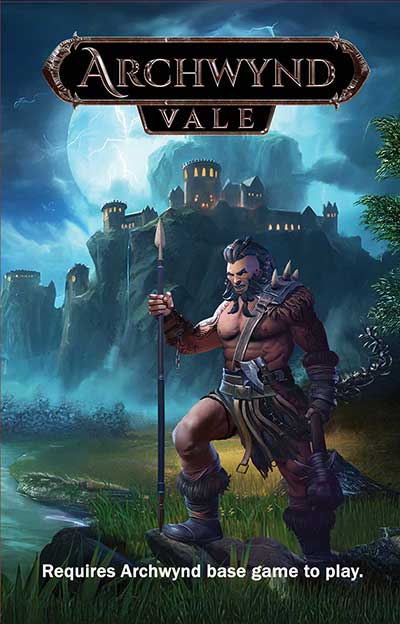
| Archwynd Vale | 1-6 | Yes | Competitive | 9.0 |
| Gloomhaven | 1-4 | Yes | Cooperative | 8.3 |
| Arkham Horror | 1-4 | Yes | Cooperative | 8.1 |
| Marvel Champions | 1-4 | Yes | Cooperative | 8.1 |
| Aeon’s End | 1-4 | Yes | Cooperative | 7.9 |
| Pathfinder RCG | 1-4 | Yes | Cooperative | 7.6 |
| Lord of the Rings | 1-4 | Yes | Cooperative | 6.9 |
| Mistborn | 1-4 | No | Cooperative | 7.7 |
| Ascension | 1-4 | No | Cooperative | 7.0 |
| Thunderstone | 1-4 | Yes | Competitive | 6.9 |
| Hero Realms | 2-4 | Yes | Competitive | 7.5 |
*Ratings are as listed on BoardGameGeek.com (BGG)
For the full list of Best RPG Card Games, see our post here.
RPG Card Games vs Board Games & TTRPGs
Where do RPG card games fit within the world of tabletop gaming? They borrow the strategic decision-making of board games and the character progression of tabletop role-playing games (TTRPGs), while creating an experience that’s uniquely their own.
Instead of lengthy rulebooks, game masters, or hours of preparation, RPG card games place encounters, characters, and meaningful choices directly into the cards themselves. The result is a faster, more accessible style of role-playing that still delivers adventure, tactical combat, and evolving stories.
Discover what separates RPG card games from traditional board games and tabletop RPGs—and why this growing genre has become a favorite among solo players, couples, and gaming groups alike.
Key Mechanics Found in RPG Card Games
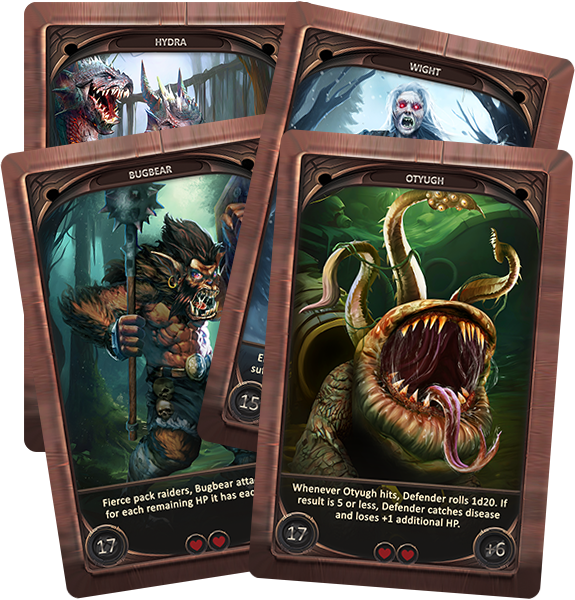
While RPG card games vary widely in theme and complexity, most share a set of core mechanics that distinguish them from other tabletop formats. These mechanics shape how stories unfold, how characters grow, and how players interact with the game world.
Understanding these systems helps players recognize what makes an RPG card game feel like role-playing rather than just a card-based challenge.
Cards as Encounters and Story Events
One of the defining mechanics of RPG card games is the use of cards to present encounters and develop characters.
Instead of a game master describing a scene, players draw or reveal cards that introduce:
-
Enemies or obstacles
-
Environmental hazards
-
Character development
-
Unexpected rewards or setbacks
Each card represents a moment in the adventure, allowing the story to emerge organically through play. This creates tension and surprise while maintaining a consistent rules framework.
In many RPG card games, the order and combination of drawn cards ensures that no two adventures unfold the same way.
Cards as Characters, Abilities, and Equipment
Characters in RPG card games are often defined or enhanced through cards rather than traditional character sheets.
Common examples include:
-
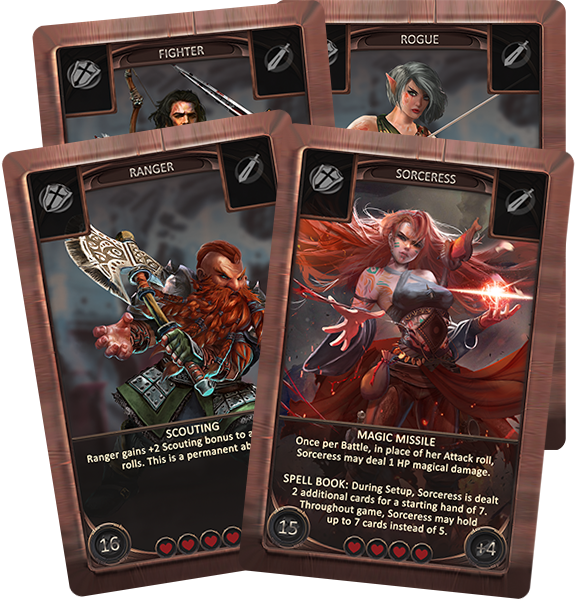
Character cards that establish identity, traits, or starting abilities
-
Ability or spell cards that expand tactical options
-
Equipment cards that modify stats or unlock new actions
This approach allows character growth to be tangible and visible. Instead of tracking changes on paper, progression happens directly on the table, reinforcing a sense of advancement as the adventure continues.
Progression Systems and Persistent Change
Progression is essential to role-playing, and RPG card games handle it in several ways:
-
Unlocking new cards as characters advance
-
Upgrading or replacing existing cards
-
Building a personalized deck over time
-
Triggering permanent narrative changes based on earlier decisions
These systems create continuity between sessions. Even when individual games are short, players feel like they are part of a larger journey rather than isolated matches.
Randomness Balanced by Choice
Most RPG card games rely on controlled randomness, typically through card draws, dice rolls, or both.
What makes these systems effective is the balance between chance and agency:
-
Random elements introduce uncertainty and excitement
-
Player decisions influence how randomness is mitigated or exploited
This balance mirrors traditional role-playing games, where dice create risk but choices determine outcomes.
Modular and Scalable Design in RPG Card Games
Many RPG card games are built around modular components:
-
Encounter decks that can be reshuffled or customized
-
Difficulty scaling through card selection
-
Expansions that add new mechanics without rewriting rules
This modularity allows games to adapt to different player counts, experience levels, and session lengths—making them especially attractive for solo players and groups with changing availability.
Why These Mechanics Matter in RPG Card Games
Together, these mechanics allow RPG card games to deliver:
-
Narrative tension without heavy improvisation
-
Character growth without bookkeeping
-
Replayability without repetitive scenarios
They represent a deliberate design philosophy: using cards not just as tools, but as storytellers.
As the genre continues to mature, these mechanics form the foundation upon which modern RPG card games build deeper, more flexible adventures.
How RPG Card Game Mechanics Translate into Player Benefits
| Core Mechanic | What It Does | Player Benefit |
|---|---|---|
| Cards as encounters and events | Introduce challenges, twists, and story beats through card draws | Every session feels unpredictable and story-driven |
| Character and ability cards | Define heroes, skills, spells, and equipment visually | Character growth is intuitive and satisfying |
| Persistent progression systems | Carry changes forward between sessions | Players feel invested in long-term outcomes |
| Controlled randomness | Balances chance with player decision-making | Tension without chaos; strategy still matters |
| Modular decks and components | Allow encounters and difficulty to scale | Games adapt easily to solo or group play |
| Rules encoded on cards | Reduce reliance on rulebooks | Faster setup and smoother play |
| Narrative prompts on cards | Guide story without a game master | Role-playing without performance pressure |
Why This Matters for Modern Players
These benefits explain why RPG card games resonate with today’s tabletop audience:
-
Limited time → shorter, flexible sessions
-
Smaller or inconsistent groups → solo and cooperative play options
-
Desire for story → narrative without heavy preparation
-
Preference for tactile play → physical components that feel meaningful
By aligning mechanics with player needs, RPG card games offer a form of role-playing that fits modern lifestyles—without sacrificing depth or immersion.
A Foundation for Evolving Designs
As designers continue to experiment with how cards can represent worlds, characters, and choices, these mechanics serve as a foundation rather than a limitation.
They allow RPG card games to grow in complexity and richness while remaining approachable—creating experiences that reward both casual play and deeper mastery.
Popular Types of RPG Card Games
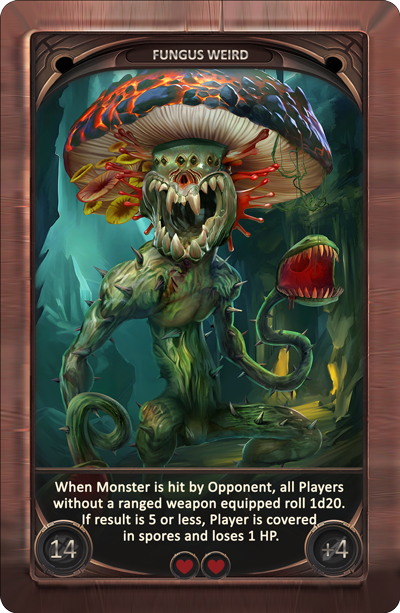
RPG card games come in many forms, each emphasizing different aspects of role-playing—from solo exploration to cooperative storytelling and competitive conflict. While many games blend multiple approaches, most fall into one or more of the categories below.
Understanding these types makes it easier to choose the right RPG card game for your preferred style of play.
Solo RPG Card Games
Solo RPG card games are designed to be played by a single adventurer, with cards acting as both storyteller and opposition.
Common characteristics include:
-
Automated encounters and events
-
Clear decision trees or branching outcomes
-
Progression systems that track character growth over time
-
Minimal setup and teardown
These games appeal to players who enjoy narrative discovery but don’t always have a group available. Many solo RPG card games also double as cooperative experiences, allowing players to switch seamlessly between solo and group play.
Cooperative RPG Card Games
Cooperative RPG card games focus on shared storytelling and teamwork. Players work together to overcome challenges presented by the game itself rather than competing against one another.
Key features often include:
-
Shared objectives and consequences
-
Synergistic character abilities
-
Collective decision-making during encounters
-
Campaign-style progression across multiple sessions
This format preserves the social aspect of tabletop role-playing while reducing the need for a dedicated game master.
Competitive RPG Card Games
Some RPG card games introduce competitive elements, pitting players against each other while still maintaining role-playing progression.
These games may feature:
-
Asymmetrical characters or factions
-
Narrative-driven conflict
-
Player-versus-player encounters shaped by story context
-
Long-term consequences that carry forward
Competitive RPG card games tend to emphasize strategy and tension while still grounding gameplay in character identity and worldbuilding.
Narrative-Focused RPG Card Games
Narrative-first RPG card games prioritize story above mechanics. Cards serve as prompts, choices, or story beats rather than tactical tools.
These games often include:
-
Minimal combat systems
-
Strong thematic storytelling
-
Emphasis on moral choices and consequences
-
Open-ended interpretation within structured frameworks
They are ideal for players who value immersion, theme, and storytelling over optimization or mechanical depth.
Hybrid RPG Card Games
Many modern RPG card games blur category boundaries, combining:
-
Cards and dice
-
Narrative exploration and tactical combat
-
Solo and cooperative modes
-
Structured encounters with emergent storytelling
These hybrid designs reflect the evolving nature of the genre and demonstrate how flexible RPG card games have become.
Choosing the Right Type for Your Play Style
Each type of RPG card game offers a different balance of story, strategy, and structure. Some players gravitate toward solitary exploration, while others prefer shared adventures or competitive tension.
The variety within the genre ensures there’s an RPG card game suited to nearly every preference—whether you’re looking for a quiet solo journey, a cooperative campaign, or a story-driven contest.
Why RPG Card Games Are Growing in Popularity
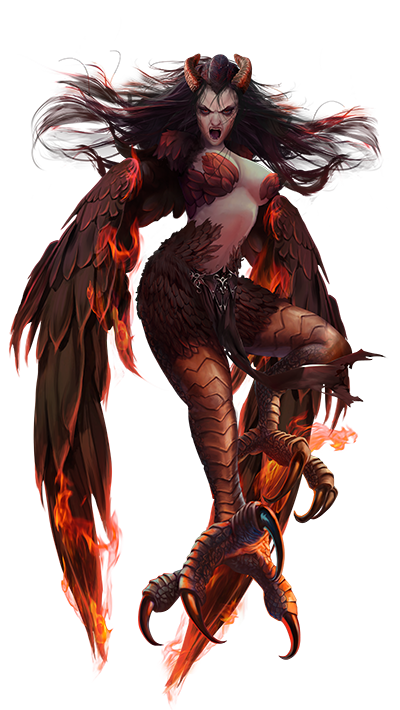
RPG card games have moved from niche experiments to a fast-growing segment of tabletop gaming. Their rise isn’t accidental—it reflects broader shifts in how people want to play, gather, and engage with games.
RPG Card Games Lower the Barrier to Role-Playing
Traditional tabletop RPGs can feel intimidating to new players. Rulebooks, character creation, and the expectation of improvisation often create friction before the game even begins.
RPG card games remove many of these barriers by:
-
Encoding rules and actions directly onto cards
-
Guiding players through encounters step by step
-
Reducing the need for rules mastery or performance
This makes role-playing more approachable while preserving the sense of adventure that draws players in.
RPG Card Games Fit Modern Schedules
Long, regularly scheduled sessions are harder to maintain than they once were. RPG card games are designed with flexibility in mind.
Many support:
-
Shorter sessions
-
Drop-in or drop-out play
-
Pause-and-resume campaigns
-
Solo play without modification
This adaptability allows players to enjoy role-playing without the long-term commitments traditionally required.
RPG Card Games Support Solo and Small-Group Play
One of the strongest growth drivers in tabletop gaming is the rise of solo play. RPG card games are uniquely suited to this format because the cards themselves handle pacing, opposition, and narrative prompts.
For players who:
-
Don’t always have a group available
-
Prefer quiet, self-paced play
-
Want meaningful progression without coordination
RPG card games provide a complete experience without compromise.
RPG Card Games Accessibility and Structure
Many players love storytelling but prefer clear boundaries and consistent systems. RPG card games offer a middle path—structured enough to keep play focused, but open enough to feel immersive.
Cards:
-
Present defined choices
-
Limit analysis paralysis
-
Keep narratives moving forward
-
Ensure consistent tone and pacing
This balance appeals to players who enjoy story-driven play without the unpredictability or preparation overhead of traditional RPGs.
RPG Card Games Offer High Replayability in Compact Form
Because encounters, events, and outcomes are driven by shuffled decks, RPG card games naturally support replayability. Each session rearranges familiar elements into new combinations, creating emergent stories without scripted repetition.
Combined with modular expansions and evolving mechanics, this makes RPG card games:
-
Easy to revisit
-
Rewarding over time
-
Compact enough for travel or storage
A Genre Aligned with How People Play Today
The popularity of RPG card games reflects a simple truth: players want meaningful experiences that respect their time.
By blending role-playing depth with card-driven structure, RPG card games deliver adventures that feel rich, flexible, and accessible—qualities that continue to draw new players into the genre.
Is Archwynd an RPG Card Game?
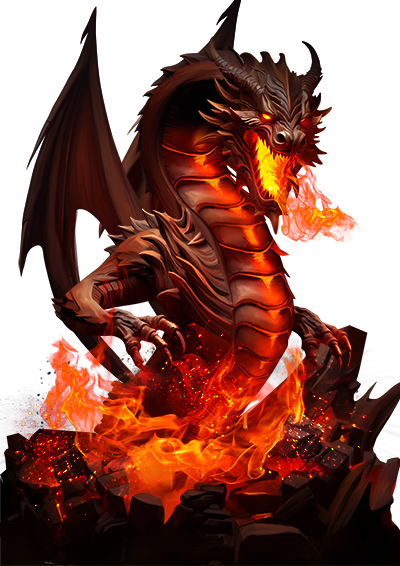
By the definitions and mechanics outlined above, Archwynd fits squarely within the RPG card game genre—while also reflecting where the genre is headed.
Rather than focusing on scripted scenarios or fixed storylines, Archwynd is built around emergent adventure. Cards introduce encounters, challenges, and discoveries, while dice resolve risk and uncertainty—allowing each session to unfold differently based on player decisions and chance.
How Archwynd Aligns with RPG Card Game Principles
Archwynd reflects several defining characteristics of RPG card games:
-
Cards as the world
Encounters, events, and outcomes are revealed through cards rather than narration or pre-written modules. -
Character-driven play
Players adopt roles for the Character they choose and make decisions that shape how challenges are approached and resolved. -
Narrative through play
Action emerges from sequences of encounters instead of scripted plotlines. -
Replayability by design
Because the order and combination of cards changes each game, no two adventures are the same.
These traits place Archwynd firmly within the RPG card game category, even as it avoids some conventions associated with campaign-heavy or scenario-bound designs.
Archwynd: A Slightly Different Emphasis
Where some RPG card games emphasize long-form campaigns or predefined story arcs, Archwynd leans toward self-contained adventures that can still feel meaningful and consequential.
This approach reflects a broader trend within the genre: role-playing experiences that prioritize discovery, tension, and choice—without requiring long-term scheduling or extensive preparation.
Archwynd: Part of an Evolving Genre
Archwynd isn’t presented as a replacement for board games or tabletop RPGs. Instead, it exists alongside them, drawing from both while embracing the strengths of card-driven systems.
In that sense, it represents a modern expression of what RPG card games can be: flexible, replayable, and shaped as much by play as by design.
How to Choose the Right RPG Card Game for You
With so many RPG card games available, the best choice depends less on what’s popular and more on how you prefer to play. Understanding your priorities—time, play style, and desired level of depth—can help narrow the field quickly.
Consider How Much Time You Want to Commit
RPG card games range from quick, self-contained adventures to longer, campaign-style experiences.
Ask yourself:
-
Do you want a game that fits into short sessions?
-
Are you looking for something you can return to over time?
-
Do you prefer episodic play or ongoing progression?
Players with limited availability often gravitate toward games that support flexible session lengths or standalone adventures.
Decide Between Solo, Cooperative, or Competitive Play
Different RPG card games are built for different social experiences.
-
Solo-focused games offer guided adventures without requiring a group.
-
Cooperative games emphasize teamwork and shared decision-making.
-
Competitive games add tension through player-versus-player dynamics while maintaining role-playing elements.
Some games, like Archwynd, support multiple modes, while others excel at one in particular.
Think About Narrative Depth vs Structure
Some players enjoy open-ended storytelling and interpretation, while others prefer clearer structure and rules.
Consider whether you want:
-
Strong narrative prompts that guide the story
-
Clearly defined outcomes and resolutions
-
A balance between storytelling and tactical decision-making
RPG card games vary widely in how much narrative freedom they offer, even within the same genre.
Evaluate Replayability and Variability
Replayability is one of the strengths of RPG card games, but it’s achieved in different ways.
Look for:
-
Modular decks that reshuffle encounters
-
Branching paths or conditional outcomes
-
Character progression that changes future play
Games that rely on emergent systems rather than fixed scenarios tend to remain engaging over time.
Assess Complexity and Learning Curve
Accessibility matters, especially for new players.
Some RPG card games:
-
Teach mechanics gradually through play
-
Rely on iconography rather than dense text
-
Minimize rules overhead
Others reward deeper mastery but may require more upfront learning. Matching complexity to your comfort level leads to a better experience.
Match the Game to Your Play Environment
Practical considerations also matter:
-
Table space
-
Portability
-
Setup and teardown time
-
Storage requirements
Compact, card-driven games often fit more easily into everyday life, whether played at home, while traveling, or between other activities.
The Right Choice Is the One You’ll Actually Play
Ultimately, the best RPG card game is the one that fits naturally into your routine and play style.
When a game aligns with how—and how often—you want to play, it’s far more likely to deliver the kind of role-playing experience you’re looking for.
Frequently Asked Questions About RPG Card Games
The following are questions and answers that gamers often have regarding RPG Card Games:
What is the difference between an RPG card game and a card game?
An RPG card game focuses on character progression, player choice, and evolving outcomes over time. A traditional card game usually centers on winning individual matches through strategy or luck, with little or no persistence between sessions.
In RPG card games, cards often represent encounters, abilities, or story events rather than just actions or points.
Are RPG card games good for solo play?
Yes. Many RPG card games are specifically designed to support solo play. Cards handle encounters, pacing, and narrative prompts, allowing a single player to experience a complete role-playing adventure without a game master or group.
Solo-friendly design is one of the fastest-growing aspects of the genre.
Do RPG card games require a game master?
Most RPG card games do not require a game master. The rules and cards guide play, present challenges, and resolve outcomes automatically.
This makes them easier to start, easier to replay, and more accessible for casual or small-group play compared to traditional tabletop RPGs.
Are RPG card games the same as deck-building games?
Not necessarily. While some RPG card games include deck-building elements, many do not.
The defining feature of an RPG card game is role-playing progression and narrative consequence, not deck optimization. In some games, players never modify their decks at all; instead, progression happens through story outcomes or card upgrades.
How long does a typical RPG card game session last?
Session length varies, but many RPG card games are designed to fit into 30–90 minute sessions. Some support longer campaigns made up of shorter individual adventures, while others are entirely self-contained.
In the case of Archwynd, a typical game can be as little as 15 minutes or as long as an hour, depending on the level of difficulty selected by the players. This is a key advantage that Archwynd brings to the genre, as long game sessions are not always possible or desired.
This flexibility is a key reason RPG card games appeal to modern players.
Are RPG card games suitable for beginners?
Yes. RPG card games are often more beginner-friendly than traditional tabletop RPGs because:
-
Rules are embedded on cards
-
Setup is faster
-
There’s less pressure to improvise or perform
They are a common entry point for players new to role-playing games.
Can RPG card games still feel like real role-playing?
Absolutely. While they trade some open-ended freedom for structure, RPG card games still deliver:
-
Meaningful choices
-
Character identity
-
Consequences that shape future play
For many players, this balance enhances immersion rather than limiting it.
Are RPG card games replayable?
Most RPG card games are designed with high replayability. Shuffled decks, modular encounters, branching outcomes, and character progression ensure that repeated plays feel different—even when using the same components.
What makes a good RPG card game?
A strong RPG card game typically combines:
-
Clear character identity
-
Meaningful choices that change outcomes
-
Balanced randomness and choice
-
Engaging artwork
-
Replayable systems
The best games align these elements with the way players actually want to play.
Is Archwynd considered an RPG card game?
By genre definition, Archwynd fits within the RPG card game category. It uses cards to present encounters and outcomes while supporting emergent storytelling and replayable adventures.

Archwynd: Forge Your Fate in the Realm of Fantasy Card Games
Welcome to the mesmerizing world of “Archwynd,” where you’ll step into a realm of magic, heroes, and an epic mission to save the world from a monstrous invasion. This extraordinary fantasy role-playing card game combines the allure of traditional tabletop RPGs and strategic card gaming, allowing you to shape your destiny with each card you play. Dive into the enchanting universe of “Archwynd,” a game that captures the essence of fantasy card games.
What Makes “Archwynd” the Perfect Fantasy Card Game?
Immediate Playability: “Archwynd” offers players the ability to immediately begin playing, with zero preparation and no need for a dungeon master or game master. You play the protagonist, making critical decisions that shape your adventure. While Archwynd is based on game mechanics similar to Dungeons & Dragons or Pathfinder Roleplaying Game, Archwynd’s rules can be learned in five minutes, making it one of the most-accessible fantasy card games.
Character Customization: Craft your hero from a wide array of cards, each representing unique skills, abilities, and equipment. As you venture forth, your character evolves, providing a deeply personalized gaming experience. Each game is unique, as you draw cards randomly from a deck.
Strategic Decisions: Playing cards and using your Character’s abilities is key in “Archwynd.” Choose a Character that reflects your playstyle: will you brute force your way through combat, or be cunning and fast on your feet — or rely on magic to do damage from afar? As you draw cards to equip your Character, use your playstyle to make decisions spanning strategy, equipment, spells and special abilities for maximum effect.
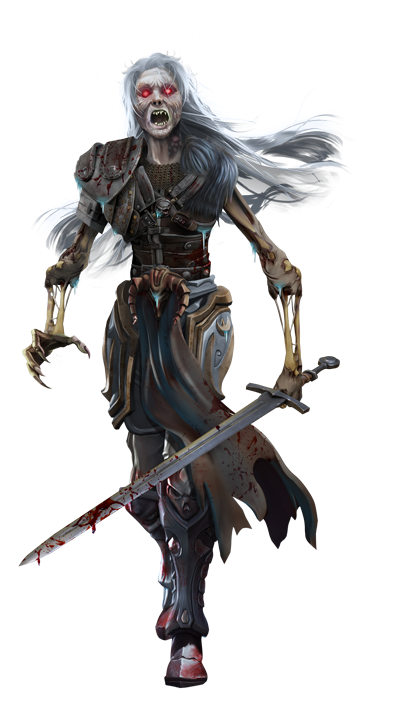
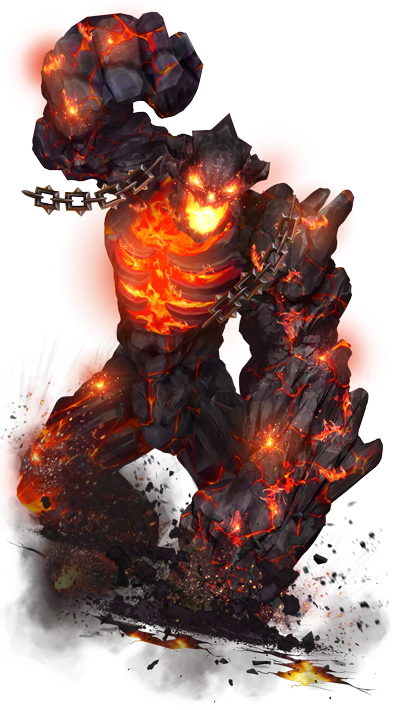
Artistry and Lore: Every card is a unique piece of custom artwork. Marvel at the exquisite art and admire the rich lore upon which each of the Characters and Monsters of Archwynd are based. Absolutely no AI was used in the creation of the artwork, making each visual a unique and customized experience. Each card is based on the rich history of fantasy role playing games, adding layers of depth and enchantment to your gaming experience.
Roleplaying without the Complexity or Time Commitment
For an in-depth understanding of the fantasy card gaming genre and why “Archwynd” is a must-try for roleplayers and card enthusiasts alike, feel free to explore our articles on Fantasy Card Games and Role Playing Card Games. These articles offer valuable insights into the genre and the excitement it brings to players of all levels.
Prepare to embark on epic adventures, define your path, and become the hero of your own saga with “Archwynd.” Whether you’re a seasoned roleplayer or a newcomer to the world of card-based adventures, this game promises an unparalleled experience that will keep you enthralled for years to come. Secure your copy of Archwynd today and embark on a journey into the fantastical world of fantasy role-playing card games.